
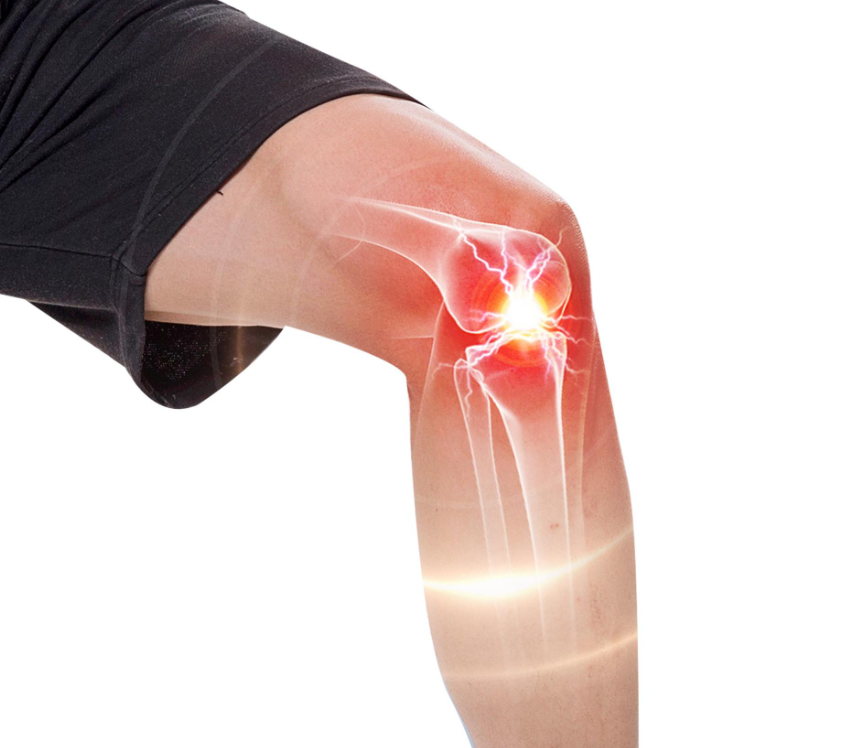
“I’m only 35, why do my knees feel like those of a 60-year-old?”
Many people have had this question—knees ache after climbing just two flights of stairs, joints crack when standing up after sitting for a long time, and even playing a ball game is so painful that you can’t move.
But you might not know: your knees are actually a “consumable item.”

Your knees are quietly "expiring"
World Health Organization data shows that in 2019, more than 528 million people worldwide suffered from arthritis, an increase of 113% compared to 1990; while in my country, the number of patients has exceeded 130 million, one-third of whom are young and middle-aged adults.
Even more disheartening is that the "natural shelf life" of knees is only 60 years.
Its "aging progress bar" actually started long ago:15-30 years old: Knees are in "perfect condition," you can wear them however you want without any problems;30-40 years old: Cartilage begins to wear down slightly, you may experience sudden soreness for a few days (this is the body "warning");40-50 years old: Soreness on the inside of the knee when walking long distances, the meniscus begins to degenerate;After 50 years old: Cartilage is worn away, arthritis strikes, the pain is so bad that you can't walk.
You're "overdrawing" your knees every day
How "fragile" are your knees? A set of weight-bearing data will tell you
When walking, the load on your knees is 1-2 times your body weight.When climbing stairs/going downhill, the load increases to 3-4 times your body weight.When squatting/kneeling, the load is 8 times your body weight.In other words: when an 80kg person squats down, their knees have to bear 640kg of weight—equivalent to carrying an adult ox!Once cartilage is worn down, it almost never "heal itself": it has no blood supply, and its repair capacity is practically zero. The "reckless" actions of youth will turn into "joint pain" in old age.
Wearing up your knees, is a joint replacement the only option?
In the past, severe knee arthritis could only be treated with "artificial joint replacement," which was expensive and painful.
But now, the Boao Lecheng International Medical Tourism Pilot Zone has brought a new solution—platelet-rich plasma (PRP) technology.
Boao Lecheng's "Unique Advantages"
As my country's only "medical special zone," Boao Lecheng can simultaneously utilize cutting-edge international medical technologies, and PRP is one of them:
Its principle is quite "magical": High-concentration platelet plasma (containing 3-5 times the repair factors of ordinary blood) is extracted from your own blood through centrifugation and then injected back into the knee.These "natural repair materials" can directly act on damaged cartilage, initiating cartilage regeneration—essentially "repairing" the knee with cartilage, and using your own tissue, completely eliminating the risk of rejection.
What problems can it solve?
Mild to moderate knee arthritis, cartilage wear
Meniscus injury, joint effusion
Joint pain after exercise
Simply put: No need for surgery or joint replacement; "self-repair" can rejuvenate worn-out knees.
Don't wait until you can't walk to pay attention
The "wear and tear" on your knees is irreversible, but early protection and intervention can slow down their aging.
Climb fewer stairs, squat less, choose elevators over stairs.
Control your weight (for every 10 pounds lost, the load on your knees is reduced by 20-30 pounds).
Avoid prolonged sitting, get up and move your joints every hour.
Don't tough it out if you have knee discomfort; seek professional medical evaluation promptly.
If your knees are starting to show signs of distress, consider the PRP technology at Boao Lecheng—access to cutting-edge international repair solutions without leaving the country.


